Saturday, June 21, 2025

Collision during takeoff/land: MBB BK 117B-2, N880SL, accident occurred on April 24, 2025, in Hartford, Illinois

  • Location: Hartford, Illinois 
  • Accident Number: CEN25LA163 
  • Date & Time: April 24, 2025, 20:51 Local 
  • Registration: N880SL 
  • Aircraft: MESSERSCHMITT-BOLKOWBLOHM BK 117 
  • Aircraft Damage: Substantial 
  • Defining Event: Collision during takeoff/land 
  • Injuries: 3 Serious 
  • Flight Conducted Under: Part 135: Air taxi & commuter - Non-scheduled - Air Medical (Unspecified)

https://data.ntsb.gov/carol-repgen/api/Aviation/ReportMain/GenerateNewestReport/200063/pdf

https://data.ntsb.gov/Docket?ProjectID=200063

The purpose of the public relations flight with the air medical helicopter was to perform landing zone training with a fire department. Prior to the flight, the pilot discussed the confined area landing zone characteristics with another company pilot, and he studied satellite imagery of the confined area landing zone. The flight manifest and the flight risk assessment tool were completed and submitted to the operational control center, which then issued a flight release after approval. Prior to initiating the approach, the pilot performed a high reconnaissance to identify the confined area landing zone and the obstacles which consisted of a tree and power lines. The pilot then performed a low reconnaissance while simultaneously performing a steep approach. The helicopter landed in the vacant lot, consisting of a flat grass field, across the street from the fire department.

Several hours later after the training was completed, the pilot performed a ground reconnaissance, noting the tree and the power lines. Ground personnel illuminated the power lines near the confined area landing zone for the night takeoff. The pilot, who was utilizing night vision goggles with the helicopter’s searchlight activated, brought the helicopter to an in ground effect hover, and he balanced the torque indications for the two turboshaft engines. The pilot decided to use the power lines in front of the helicopter as a visual reference for the initial climb. During the initial climb, the helicopter inadvertently drifted rearward, and the tail rotor system impacted the tree. The helicopter rotated to the right, descended, and it came to rest partially upright. Shortly after impacting the ground, a postimpact fire initiated, and partially consumed the helicopter.

The front right seat pilot and the rear left seat (aft facing) flight nurse were able to egress on their own from the helicopter. The front left seat flight nurse required assistance from ground personnel to egress from the helicopter. The fire department was able to immediately perform fire suppression efforts on the helicopter. The helicopter sustained substantial damage to the fuselage, the main rotor system, the empennage, and the tail rotor system. The helicopter was not equipped with a crash resistant fuel system, nor was it required by regulation.

- Probable Cause: The pilot’s failure to maintain directional control during the initial climb at night from a confined area landing zone, that resulted in an impact with a tree, a loss of control, and a subsequent impact with terrain.

Sys/Comp malf/fail (non-power): Diamond DA42 NG Twin Star, N508PA, accident occurred on November 15, 2024, at Daytona Beach International Airport (DAB/KDAB), Daytona Beach, Florida

  • Location: Daytona Beach, Florida 
  • Accident Number: ERA25LA068 
  • Date & Time: November 15, 2024, 16:39 Local 
  • Registration: N508PA 
  • Aircraft: DIAMOND AIRCRAFT IND GMBH DA 42 NG 
  • Aircraft Damage: Substantial 
  • Defining Event: Sys/Comp malf/fail (non-power) 
  • Injuries: 2 None 
  • Flight Conducted Under: Part 91: General aviation - Ferry

https://data.ntsb.gov/carol-repgen/api/Aviation/ReportMain/GenerateNewestReport/199390/pdf

https://data.ntsb.gov/Docket?ProjectID=199390

While on approach during a repositioning flight, the pilot selected the landing gear to the down position. The right main landing gear failed to extend and after multiple attempts to get the gear to extend, the pilot made the decision to land with the right main gear up. Video of the accident showed a smooth landing on the left main and nose with the right wing settling to the runway. The airplane exited the right side of the runway, and the right wing struck a runway light and a taxiway sign. Upon contact with the sign, the video showed the right main landing gear falling out of the wheel well. The runway excursion resulted in substantial damage to the right wing.

An examination of the maintenance records found that prior to the accident flight, the right main wheel and tire were replaced. When the gear was retracted during the landing gear examination, the tire contacted the outer diameter of the wheel well cutout and the hydraulic system forced it into the well. When selected down, the right main landing gear became stuck on the wheel well cutout and was unable to be extended. Measurement of the tire and four others of the same make, model, and size showed the diameter of the tire to be 0.5 inches larger than the recommended tire. The landing gear was tested with the manufacturer’s recommended tire and the landing gear extended and retracted normally with no binding.

Review of the DA-42 maintenance manual found that the minimum clearance of the tire to the outer diameter of the wheel well was 4 millimeters. With the tire used, having a larger tread radius, this exceeded the 4-millimeter threshold and caused the tire to get stuck. The maintenance manual procedure for replacement of a wheel and tire required that the landing gear be retracted and adjusted for this tolerance on every tire change. The technician who changed the tire reported that he did not perform the landing gear retraction and adjustment after changing the tire.

- Probable Cause: The maintenance technician’s failure to follow the manufacturer’s recommended procedures during a wheel and tire change to ensure proper clearance of the tire to the wheel well resulting in the right main wheel becoming stuck in the well and subsequent partial gear extension landing.

Abnormal runway contact: Piper PA-28-180 Cherokee C, N7951W, accident occurred on May 5, 2025, at South St Paul Municipal Airport/Richard E Fleming Field (SGS/KSGS), South Saint Paul, Minnesota

  • Location: South Saint Paul, Minnesota 
  • Accident Number: CEN25LA171 
  • Date & Time: May 5, 2025, 17:55 Local 
  • Registration: N7951W 
  • Aircraft: Piper PA28 
  • Aircraft Damage: Substantial 
  • Defining Event: Abnormal runway contact 
  • Injuries: 2 None 
  • Flight Conducted Under: Part 91: General aviation - Instructional

https://data.ntsb.gov/carol-repgen/api/Aviation/ReportMain/GenerateNewestReport/200113/pdf

https://data.ntsb.gov/Docket?ProjectID=200113

During the instructional flight, the airplane was landing to the runway with the student pilot operating the flight controls. Upon touchdown, the airplane “swerved hard to the left.” The flight instructor immediately announced, “my controls” and he attempted to maintain directional control. He reported the loss of directional control happened “so fast” and that he was unable to recover the airplane. After the accident, the student pilot reported that he “may have had his feet on the brakes” upon touchdown.

The airplane sustained substantial damage to the engine mount, with a bend in a truss tube. The flight instructor reported there were no preimpact mechanical malfunctions or failures with the airframe or the engine that would have precluded normal operation. The flight instructor further reported that in the future, he will be having new student pilots announce, “heels on the floor” during the landing flare, to prevent inadvertent brake application.

- Probable Cause: The student pilot’s inadvertent brake application during the touchdown, that resulted in abnormal runway contact and a loss of directional control. Contributing to the accident was the flight instructor’s inadequate supervision of the student pilot during the landing.

Ground collision: Cessna 177RG Cardinal RG, N2614V, accident occurred on May 15, 2025, at Wahoo Municipal Airport (AHQ/KAHQ), Wahoo, Nebraska

  • Location: Wahoo, Nebraska 
  • Accident Number: CEN25LA179 
  • Date & Time: May 15, 2025, 20:20 Local
  • Registration: N2614V 
  • Aircraft: Cessna 177RG 
  • Aircraft Damage: Substantial 
  • Defining Event: Ground collision 
  • Injuries: 2 None 
  • Flight Conducted Under: Part 91: General aviation - Personal

https://data.ntsb.gov/carol-repgen/api/Aviation/ReportMain/GenerateNewestReport/200171/pdf

https://data.ntsb.gov/Docket?ProjectID=200171

The pilot reported that as he taxied the airplane to the ramp, he steered toward one of the available parking spots, and the left wing of the airplane struck a light pole which resulted in substantial damage to the outboard end of the left wing. The pilot reported that there were no mechanical anomalies with the airplane that would have precluded normal operations.

- Probable Cause: The pilot’s failure to maintain clearance from an obstacle during taxi operations.

Landing area overshoot: Cessna R182 Skylane RG, N738PG, accident occurred on November 18, 2024, at A J Patrol Airport (LS09), Crowley, Louisiana

  • Location: Crowley, Louisiana
  • Accident Number: CEN25LA045
  • Date & Time: November 18, 2024, 14:35 Local
  • Registration: N738PG Aircraft: Cessna R182
  • Aircraft Damage: Substantial
  • Defining Event: Landing area overshoot
  • Injuries: 1 None
  • Flight Conducted Under: Part 91: General aviation - Business

https://data.ntsb.gov/carol-repgen/api/Aviation/ReportMain/GenerateNewestReport/195502/pdf

https://data.ntsb.gov/Docket?ProjectID=195502

The pilot reported that he was returning from a pipeline patrol flight and was landing to the south on the north-south oriented grass runway which was wet from recent rain. He said that upon touchdown the airplane “yanked” to the left and began sliding on the wet grass. He could not stop the airplane because of the reduced braking action due to the wet runway. The airplane impacted a hangar located at the south end of the runway and the right wing sustained substantial damage.

The operator reported that he had witnessed the accident. He noted that the weather conditions were getting worse and were approaching instrument meteorological conditions. He saw the airplane approach from the north to land to the south on the north-south oriented runway. Initially the airplane was lined up on a field to the east of the runway and he then saw the airplane attempt to turn and line up with the runway. He noted that the airplane appeared lower and faster than normal. After the airplane turned toward the runway, it touched down about halfway down the 2,500 ft. runway and was about 45° from runway alignment. The airplane then started to skid sideways on the wet grass. The airplane tires then regained grip and the airplane darted to the side and impacted the hangar at the south end of the runway. The operator stated that the pilot did not report any problem with the rudder trim system either before or after the accident.

Well after the accident, the pilot stated that the rudder trim on the airplane was not operating correctly, and the skid slip ball was not centered during the flight. He said the rudder trim wheel had no tension. He reported no other mechanical issues with the airplane. The pilot’s report of the rudder trim system issues was not provided until after the airplane was no longer available for examination of the rudder trim system. Regardless, the rudder trim should not have inhibited the pilot from maintaining directional control of the airplane while landing on the wet runway.

The reported weather conditions at a nearby airport included a broken ceiling of 700 ft. above ground level (agl), an overcast ceiling at 1,300 ft. agl, and 7 miles visibility.

- Probable Cause: The pilot’s un-stabilized landing approach and high airspeed during the approach, that resulted in touchdown with insufficient runway remaining to stop the airplane.

Hard landing: Brunner-Winkle Bird, N15641, accident occurred on November 17, 2024, at Big 'T' Airport (64GA), Senoia, Georgia:

  • Location: Senoia, Georgia 
  • Accident Number: ERA25LA055 
  • Date & Time: November 17, 2024, 13:30 Local 
  • Registration: N15641 
  • Aircraft: BRUNNER-WINKLE BIRD A 
  • Aircraft Damage: Substantial 
  • Defining Event: Hard landing 
  • Injuries: 1 None 
  • Flight Conducted Under: Part 91: General aviation - Personal

https://data.ntsb.gov/carol-repgen/api/Aviation/ReportMain/GenerateNewestReport/195533/pdf

https://data.ntsb.gov/Docket?ProjectID=195533

The pilot of the antique, bi-wing, tailwheel airplane stated that he was flying locally when he landed hard on the grass runway. The left landing gear collapsed resulting in substantial damage to the upper left wing and lower right wing. The pilot reported no preimpact mechanical malfunctions or failures with the airplane that would have precluded normal operation.

- Probable Cause: The pilot’s improper flare, which resulted in a hard landing, and landing gear collapse.

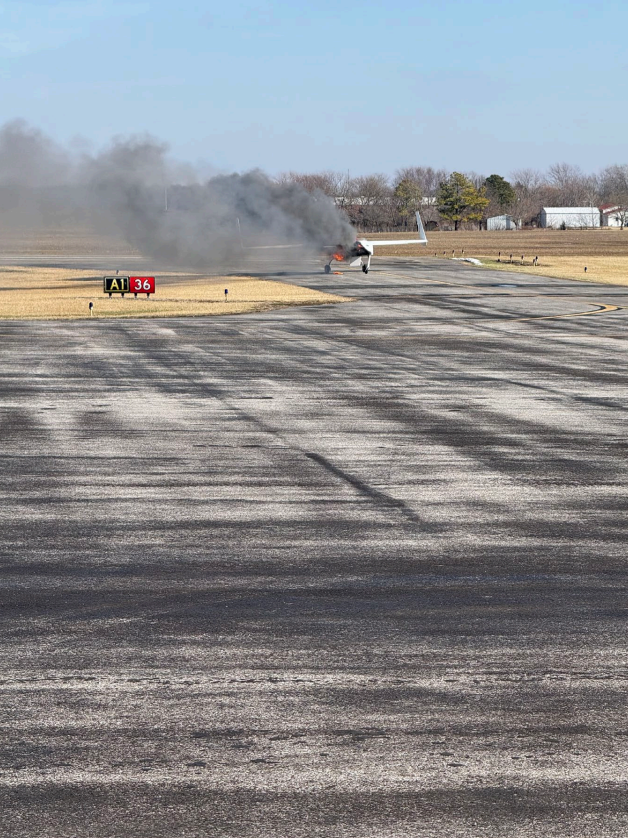
Fire/smoke (non-impact): Rutan Long-EZ, N88LE, accident occurred on February 1, 2025, at Sparta Community-Hunter Field Airport (SAR/KSAR), Sparta, Illinois

  • Location: Sparta, Illinois
  • Accident Number: CEN25LA090 
  • Date & Time: February 1, 2025, 13:50 Local 
  • Registration: N88LE 
  • Aircraft: Rutan Long-EZ 
  • Aircraft Damage: Destroyed 
  • Defining Event: Fire/smoke (non-impact) 
  • Injuries: 1 None 
  • Flight Conducted Under: Part 91: General aviation - Personal

https://data.ntsb.gov/carol-repgen/api/Aviation/ReportMain/GenerateNewestReport/199639/pdf

https://data.ntsb.gov/Docket?ProjectID=199639

The pilot reported that he taxied to the runway and performed an engine runup. During the runup, the pilot noticed that one of the magnetos was not operating properly, so he started to taxi back to his hangar. While taxing back to the hangar, he smelled burning wire insulation, and shortly after the engine stopped. He attempted to restart the engine three times. On the third restart attempt, he noticed that flames were coming out from the right wing near the fuel cap. He immediately exited the airplane and called the fire department. The airplane was destroyed by the fire.

Due to the damage caused by the fire, an examination of the airplane components to determine the source of the fire was not possible.

- Probable Cause: An onboard fire for unknown reasons.