Wednesday, June 04, 2025

Avid Magnum, N103DG, fatal accident occurred on June 23, 2023, near Beaver Island, Michigan


  • Location: Beaver Island, Michigan 
  • Accident Number: CEN23FA257 
  • Date & Time: June 23, 2023, 08:44 Local 
  • Registration: N103DG Aircraft: Avid Magnum 
  • Aircraft Damage: Substantial 
  • Defining Event: Controlled flight into terr/obj (CFIT) 
  • Injuries: 1 Fatal, 1 Minor 
  • Flight Conducted Under: Part 91: General aviation - Personal

On June 23, 2023, about 0844 eastern daylight time, an Avid Magnum airplane, N103DG, was substantially damaged when it was involved in an accident near Beaver Island, Michigan. The pilot sustained minor injuries. The passenger was fatally injured. The airplane was operated as a Title 14 Code of Federal Regulations Part 91 personal flight.


During a local personal sightseeing flight, the pilot was maneuvering the airplane to see a lighthouse on a remote island. Although he reported that he had good visibility and that the water was flat, the airplane inadvertently impacted the surface of the lake. The pilot regained consciousness in the water but had no recollection of the accident. 


The airplane was submerged in 20 ft of water. A postaccident examination of the airplane revealed that both wings, the floats, and the lower fuselage exhibited significant aft crush damage consistent with a nose low, left-wing low impact with the water. An examination of the engine and airframe revealed no mechanical anomalies that would have precluded normal operations. 


According to a surface observation about 6 miles southeast of the accident site, visual meteorological conditions prevailed. Satellite imagery for the accident site indicated cloud cover and lower visibility over most of the lake due to wildfire smoke. The first responders reported that about 15 minutes after the accident there was a lack of contrast on the horizon with smoke, haze, and calm seas, with no discernable horizon visible. The pilot of a rescue helicopter that arrived at the accident site about 30 minutes after the accident confirmed that the smoke and haze, combined with no wind and very calm water, made it impossible to determine where the sky and water met. There was no record that the pilot obtained a weather briefing before the flight.


Given the condition of the airplane and the visibility conditions at the time of the accident, it is likely that the pilot was not able to discern between the water and the horizon due to the smoke, haze, and the calm waters which resulted in the inadvertent descent into the water.


- Probable Cause: The pilot’s failure to maintain clearance from the water while maneuvering in low visibility conditions due to smoke and haze.

https://data.ntsb.gov/carol-repgen/api/Aviation/ReportMain/GenerateNewestReport/192431/pdf

https://data.ntsb.gov/Docket?ProjectID=192431

https://registry.faa.gov/AircraftInquiry/Search/NNumberResult?nNumberTxt=103DG

Cessna 182T Skylane, N577TZ, fatal accident occurred on May 24, 2023, near Grand Isle, Louisiana


  • Location: Grand Isle, Louisiana 
  • Accident Number: CEN23FA201 
  • Date & Time: May 24, 2023, 11:01 Local 
  • Registration: N577TZ 
  • Aircraft: Cessna 182T 
  • Aircraft Damage: Substantial 
  • Defining Event: Miscellaneous/other 
  • Injuries: 1 Fatal 
  • Flight Conducted Under: Part 91: General aviation - Aerial observation 
https://data.ntsb.gov/carol-repgen/api/Aviation/ReportMain/GenerateNewestReport/192235/pdf

https://data.ntsb.gov/Docket?ProjectID=192235

https://registry.faa.gov/AircraftInquiry/Search/NNumberResult?nNumberTxt=N577TZ

Westbank Fishing LLC

On May 24, 2023, about 1101 central daylight time, a Cessna 182T airplane, N577TZ, sustained substantial damage when it was involved in an accident near Grand Isle, Louisiana. The pilot was fatally injured. The airplane was operated as a Title 14 Code of Federal Regulations Part 91 aerial observation flight.


Company information and ADS-B data indicated that the pilot performed several low-level flight maneuvers for about 3 hours that were consistent with aerial observation for fish spotting activities. A boat captain, who was in communication with the accident pilot regarding the fish spotting plans for the day, stated the pilot seemed upset, agitated, and discouraged during his radio communications, which he stated was abnormal for the pilot. Due to his concerns about the pilot’s attitude, the boat captain told the pilot to land and take a break. The pilot stated he was going to fly to the north, and there were no further communications with the pilot. 


The last ADS-B contact showed the airplane about 1.8 miles offshore on a southwest heading about 175 ft above the ocean water. There were no emergency or distress calls received from the accident airplane. Company personnel notified the US Coast Guard about a missing airplane and a search was initiated. The pilot’s body was located the following morning near a coastline, and about 1 week later the airplane was located by a fishing vessel and subsequently recovered. 


Damage to the airplane structure was consistent with the airplane impacting the water in an upright, slight nose-down attitude at a relatively slow airspeed. Postaccident examination of the airplane revealed no mechanical malfunctions or failures that would have precluded normal operation. 


Toxicological testing detected ethanol in all of the multiple tested postmortem specimens of the pilot. Although some of the detected ethanol may have been from sources other than alcohol consumption, based on the pattern of ethanol results and the pilot’s witnessed behavior, the pilot had likely consumed alcohol and was impaired by the effects of alcohol at the time of the accident. The pilot’s impairment due to the effects of alcohol likely precluded his ability to safely operate the airplane.


- Probable Cause: The pilot’s operation of the airplane while intoxicated, resulting in its impact with the ocean.

Bell 206L-4 LongRanger IV, N652HA, fatal accident occurred on July 29, 2023, near Springfield, Ohio


  • Location: Springfield, Ohio 
  • Accident Number: ERA23FA317 
  • Date & Time: July 29, 2023, 12:06 Local 
  • Registration: N652HA Aircraft: Bell 206-L4 
  • Aircraft Damage: Substantial Defining Event: Low altitude operation/event 
  • Injuries: 1 Fatal 
  • Flight Conducted Under: Part 137: Agricultural
https://data.ntsb.gov/carol-repgen/api/Aviation/ReportMain/GenerateNewestReport/192737/pdf

https://data.ntsb.gov/Docket?ProjectID=192737

https://registry.faa.gov/AircraftInquiry/Search/NNumberResult?nNumberTxt=N652HA

Helicopter Applicators Inc


On July 29, 2023, about 1206 eastern standard time, a Bell 206-L4 helicopter, N652HA, was involved in an accident near Springfield, Ohio. The commercial pilot was fatally injured. The helicopter was operated as an agricultural flight conducted under the provisions of Title 14 Code of Federal Regulations Part 137.


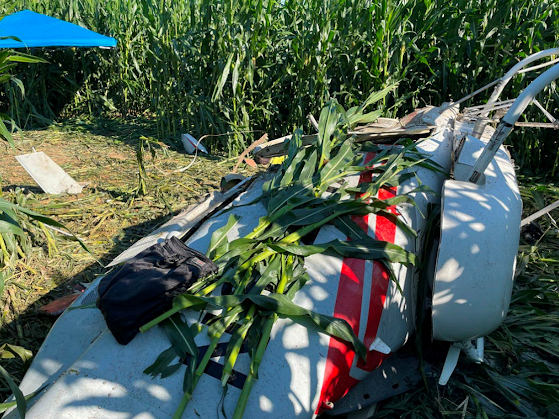
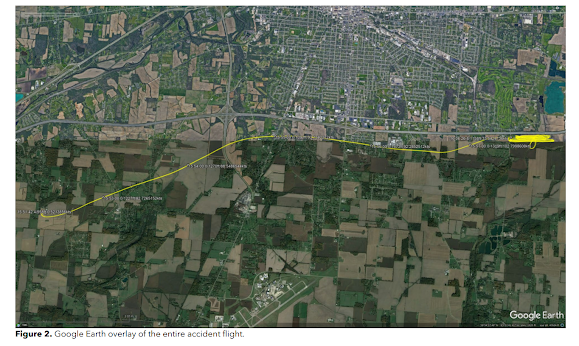
The commercial pilot was spraying a cornfield on an east-west pattern when he flew through a set of four high-tension powerlines that ran northeast-southwest through the cornfield. The middle two powerline wires were severed, but the top and bottom wires were not damaged. The helicopter came to rest about 150 ft east of the powerlines. A review of ADS-B data revealed that when the pilot arrived at the cornfield, he circled and flew over the powerlines, indicating that he was likely aware the powerlines would be an obstacle during the spray run. He then made several more spraying passes over the powerlines before the data ended shortly before he impacted the wires. On-scene examination of the wreckage revealed all major components of the helicopter were located at the accident site and that there was no evidence of any preimpact mechanical or malfunctions or failures of the helicopter that would have precluded normal operation.


- Probable Cause: The pilot’s failure to remain clear of powerlines during an agricultural spraying operation.

American Champion 7GCBC Citabria, N342H, fatal accident occurred on May 9, 2025, near Big Creek Airport (U60), Big Creek, Idaho

  • Location: Big Creek, ID 
  • Accident Number: WPR25FA153 
  • Date & Time: May 9, 2025, 09:00 Local 
  • Registration: N342H 
  • Aircraft: AMERICAN CHAMPION AIRCRAFT 7GCBC 
  • Injuries: 1 Fatal 
  • Flight Conducted Under: Part 91: General aviation - Personal 

https://registry.faa.gov/AircraftInquiry/Search/NNumberResult?nNumberTxt=N342H

https://data.ntsb.gov/carol-repgen/api/Aviation/ReportMain/GenerateNewestReport/200138/pdf


On May 9, 2025, about 0900 mountain daylight time, an American Champion Aircraft 7GCBC, N342H, was substantially damaged when it was involved in an accident near Big Creek, Idaho. The pilot was fatally injured. The airplane was operated as a Title 14 Code of Federal Regulations Part 91 personal flight.


According to a family member, the pilot was a hunter and had flown to many of the remote air strips around the area for pleasure. A witness located at the Big Creek airport (U60), Big Creek, Idaho, stated he observed the airplane land at the airport early that morning, and then heard the airplane take off to the north soon after. The witness did not observe the takeoff but did recall the engine sounded normal when the airplane departed. There were no known witnesses to the accident sequence.


Examination of the accident site revealed that the airplane impacted heavily wooded sloping mountainous terrain about 2,000 ft north of the departure end of runway 01. The airplane came to rest upright on a heading of about 200° magnetic at an elevation of 5,538 ft. mean sea level (msl). The debris path was oriented along a heading of about 010° magnetic and was about 90 ft in length. The first identifiable point of contact (FIPC) was a series of damaged trees, about 50 ft in height, that had damaged limbs near the top of the trees. The right-wing tip was observed about 10 ft north of the FIPC. Debris extended throughout the heavily wooded area to the main wreckage.


Examination of the main wreckage revealed that both wings and empennage remained attached to the fuselage. The engine remained attached to the engine mount, however, was displaced downward about 15°. The instrument panel was impact damaged and separated from the fuselage structure. The right main landing gear was separated from the fuselage and was located within the debris path. All major structural components of the airplane were located throughout the wreckage debris path.


The wreckage was recovered to a secure location for further examination. 

Beechcraft F33A Bonanza, N6376S, accident occurred on May 16, 2025, near West Houston Airport (IWS/KIWS), Houston, Texas

  • Location: Houston, TX 
  • Accident Number: CEN25LA182 
  • Date & Time: May 16, 2025, 14:59 Local 
  • Registration: N6376S 
  • Aircraft: Beech F33A 
  • Injuries: 1 None 
  • Flight Conducted Under: Part 91: General aviation - Personal 

https://registry.faa.gov/aircraftinquiry/Search/NNumberResult?NNumberTxt=N6376S

https://data.ntsb.gov/carol-repgen/api/Aviation/ReportMain/GenerateNewestReport/200176/pdf

On May 16, 2025, about 1459 central daylight time, a Beech F33A airplane, N6376S, was destroyed when it was involved in an accident near Houston, Texas. The pilot was not injured. The airplane was operated as a Title 14 Code of Federal Regulations Part 91 personal flight.


The pilot reported that the engine seemed to perform normally during takeoff. However, shortly afterward, the engine speed dropped abruptly from about 2,780 rpm to less than 2,000 rpm. The pilot was unable to maintain altitude, and he executed a forced landing to a wooded area southeast of the airport.


The airplane came to rest upright about 0.50-mile southeast of the departure end of the runway. After exiting the airplane, the pilot noticed a small fire near the outboard portion of the left wing. Unfortunately, the fire spread and consumed most of the airframe before it could be extinguished.


The extent of the post-impact fire damage will preclude an examination of the airframe fuel system. An engine examination is planned once the airplane has been recovered from the accident site.

Tuesday, June 03, 2025

Beechcraft 95-B55 Baron, N4321Z, fatal accident occurred on May 17, 2025, near Rocky Mountain Metropolitan Apt (BJC/KBJC), Broomfield, Colorado

https://registry.faa.gov/AircraftInquiry/Search/NNumberResult?nNumberTxt=4321Z

https://data.ntsb.gov/carol-repgen/api/Aviation/ReportMain/GenerateNewestReport/200166/pdf

CEDOCS
  • Location: Broomfield, CO 
  • Accident Number: CEN25FA178 
  • Date & Time: May 17, 2025, 10:03 Local 
  • Registration: N4321Z 
  • Aircraft: Beech 95-B55 (T42A) 
  • Injuries: 2 Fatal 
  • Flight Conducted Under: Part 91: General aviation - Personal

On May 17, 2025, about 1003 mountain daylight time, a Beechcraft 95-B55, was destroyed when it was involved in an accident near Broomfield, Colorado. The pilot and pilot-rated passenger sustained fatal injuries. The flight was being operated as a Title 14 Code of Federal Regulations Part 91 personal flight.


According to family members, the owner was providing a cross-country familiarity flight to the pilot-rated passenger who had recently purchased a similar airplane. Preliminary air traffic control (ATC) radar data showed the airplane depart runway 30R from the Rocky Mountain Metro Airport (BJC), Broomfield, about 1000. Shortly after rotation, the pilot made a radio call to the BJC control tower stating, “we had a door pop, we need to come back around.” ATC subsequently replied that the pilot could make “right closed traffic for 30R” along with asking the pilot are “you going to climb?”


Airport surveillance camera footage and radar data showed the airplane stopped its initial climb at 6,024 ft mean sea level (msl), about 400 ft above ground level, shortly after passing the departure end of runway 30R. ATC made numerous attempts to elicit a response from the pilot stating that they were cleared to land runway 30R and further cleared the pilot to land the airplane on any runway. The airplane entered the right traffic pattern for runway 30R, as instructed, and started a continuous slow descent. During the right crosswind to downwind turn, the airplane slowed from 94 knots (kts) groundspeed at 1002:12 to 81 kts about 15 seconds later.


At 1002:49, surveillance camera video from a bus stop along U.S. Route 36, located near the right downwind traffic pattern leg, captured the airplane with the landing gear extended entering a left bank that increased in roll rate until the airplane was in an inverted left wing down and nose low dive at 1002:53. The surveillance video shows what appears to be an open door, consistent with the pilot’s report to ATC (see Figure 1). 

The accident site was in a flat open field about 1.5 nautical miles north of runway 30R. Impact marks and debris were consistent with the airplane impacting the terrain in an estimated 90° left bank and nose down attitude. During the impact, the airplane rotated counterclockwise 180° opposite the direction of travel and came to rest upright. The debris field was about 85 ft in length with evidence of a postaccident fire.


The main cabin door was separated from the airplane, located on the left side of the debris path, and the door handle was found in the open position (see Figure 2). The rear sloped latch, lower pin, and upper claw latch were found in the locked position.

The components of the cabin baggage door thumb latch were located in the fuselage debris, and the latch was found in the closed and locked position. The nose baggage door could not be identified due to impact fragmentation of the forward fuselage. Flight control continuity was established from all flight control surfaces to their respective controls.

Airmax SeaMax M-22, N154RL, accident occurred on May 17, 2025, near Dahlgren Center, Virginia


https://registry.faa.gov/AircraftInquiry/Search/NNumberResult?nNumberTxt=N154RL

https://data.ntsb.gov/carol-repgen/api/Aviation/ReportMain/GenerateNewestReport/200177/pdf

  • Location: Dahlgren Center, VA 
  • Accident Number: ERA25LA203 
  • Date & Time: May 17, 2025, 16:00 Local 
  • Registration: N154RL 
  • Aircraft: SEAMAX AIRCRAFT LTDA SEAMAX M-22 
  • Injuries: 1 Serious 
  • Flight Conducted Under: Part 91: General aviation - Personal

On May 17, 2025, about 1600 eastern daylight time, a special light sport amphibious Seamax M-22 airplane, N154RL, was substantially damaged when it was involved in an accident near Dahlgren, Virginia. The pilot sustained serious injuries. The airplane was being operated as a Title 14 Code of Federal Regulations Part 91 personal flight.


According to family, the pilot and passenger departed from his home-based airport near Fredericksburg, Virginia, then flew to Dahlgren, Virginia for an amphibious water landing on the Potomac River. Shortly after dropping off his passenger, the pilot taxied out for an attempted takeoff.


Surveillance footage from four separate cameras located at various sites on shore, showed the airplane during the initial takeoff run on a west to east track. After what appeared to be a normal takeoff run, the airplane rotated and lifted off, but during the initial climb, the airplane appeared to struggle to maintain the climb. The wings were rocking back and forth as the airplane climbed to about 75 to 100 ft above the water surface. The airplane then made a left turn to the north; shortly after, the left wing dropped, and the airplane abruptly descended in a left spiral until impacting the water. According to emergency personnel, the airplane floated briefly, and the pilot was rescued. A brief engine compartment fire ensued.


Post accident examination of the wreckage by the NTSB investigator revealed the airplane impacted the water in a steep, nose down attitude. The water was about 8 ft deep at the point of impact. There was substantial damage to the airframe; the left wing was impact-separated and the cockpit and fuselage were fractured and crushed in multiple locations. The empennage remained attached by control rods and cables. All flight control surfaces remained attached to their respective positions and were manually manipulated with corresponding cable movement. All fractures in the flight control cables had a “broomstraw” appearance indicative of overload.


The engine, mounted on top of the airframe in a pusher configuration, was exposed to fire near the propeller side of the engine, however, the engine was largely intact, and most thermal damage was limited to plastics and wiring insulation. Engine crankshaft and valve action continuity was confirmed. The spark plugs showed normal wear. The engine appeared well lubricated, and the oil tank (dry sump forced lubrication system) was intact and full of oil.


The 3-bladed composite propeller remained attached to the hub and reduction gearbox assembly, and it was manually rotated without any hinderance. One of the blades was destroyed by fire. The opposing blades remained intact. During manual operation of the propeller, bay water was forced out of the cylinders and the air filter assembly.


The engine fuel line adjacent to the cylinders was examined and about 5-ounces of liquid with the smell and color of aviation gasoline was observed; it was free of water or other contaminants.


The engine control unit was retained for further examination and download.